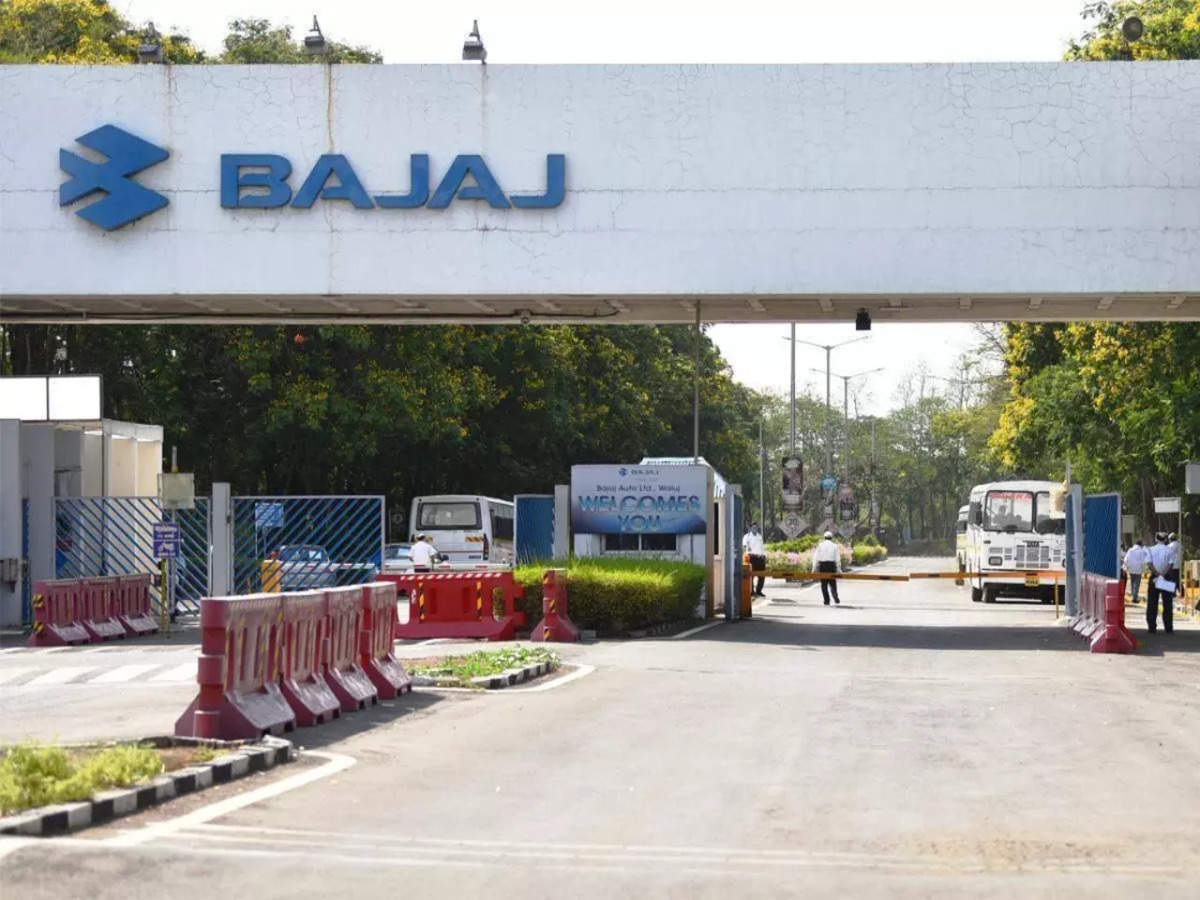
The stock is down on the news. Bajaj Auto has seen its net profit fall 22% in Q3 FY17 at ₹1,214 crore. Here’s why. In Q3 FY16, the company enjoyed a one-time gain of ₹1,766 crore from selling its stake in Bajaj Finserve. That helped it post a net profit of ₹2,882 crore in that quarter. This time around, the company didn’t enjoy any such gains and posted just a 22% rise in profits to ₹1,214 crore over Q3 FY16 when it had made a net profit
Bajaj Auto, a two- and three-wheeler maker, reported flat revenue for the quarter ended 31 December, 2021 (Q3FY22), at ₹9,021 crore. It was ₹8,909 crore in the same period last year.
On Wednesday, Bajaj Auto stocks increased 1.51% to close at ₹3,452 each on the NSE. The company posted an EBITDA (earnings before interest, tax, depreciation and amortisation) of ₹1,405 crore for the quarter ended December 31, 2016; this is down 20% from a year
As of December 31, 2021, there were total of 1.18 million units sold in India and around the globe. Bajaj Auto has been able to increase its market share by 2.6% in the third quarter at 19.2% while domestic sales have fell 20% to 469,000 units.
In the domestic commercial vehicle market, Bajaj Auto sales grew 52% with a market share of 71%, continuing its leadership position across the three product categories in this segment.
Bajaj Auto exports continued to record strong sales with average monthly volumes in excess of 219,000 units. Exports by volume exceeded 2.5 million units, the highest ever.
Bajaj Auto International Holdings BV, a Netherlands-based 100% subsidiary of Bajaj Auto, held 47.99% stake in KTM AG as on 29 September 2021. As part of the deal between Pierer Bajaj AG and KTM AG, 49.90% stake in KTM AG was swapped for 46.50% stake in Pie
 euroworld.car